

Polish modernism grew out of a paradox: it set out to be a project of modernity while developing in a country marked by war, material shortages, and technological and political constraints. Rather than simply submitting to these conditions, Polish designers turned them into a stimulus for experimentation. Linen, wood, wood shavings, glass and industrial materials were transformed into objects designed not only to meet everyday needs, but also to improve the quality of life. Polish Modernism. A Struggle for Beauty explores this experience and asks what remains relevant today, in a world of overproduction, climate crisis and new technologies.
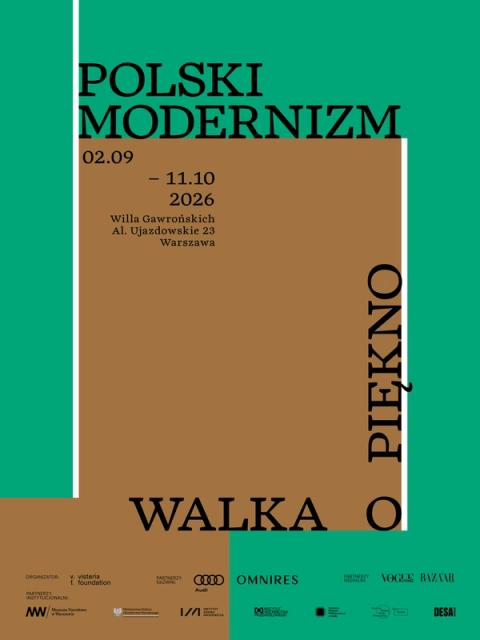
Following its premiere at Milan Design Week 2026, the exhibition will be presented at Gawroński Villa in a new iteration created specifically for Warsaw.
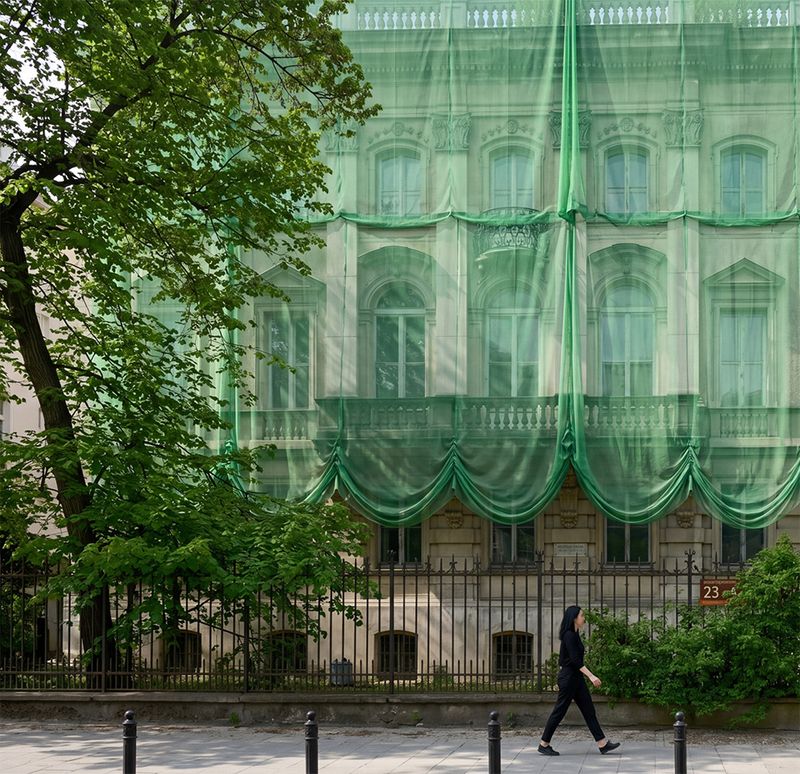
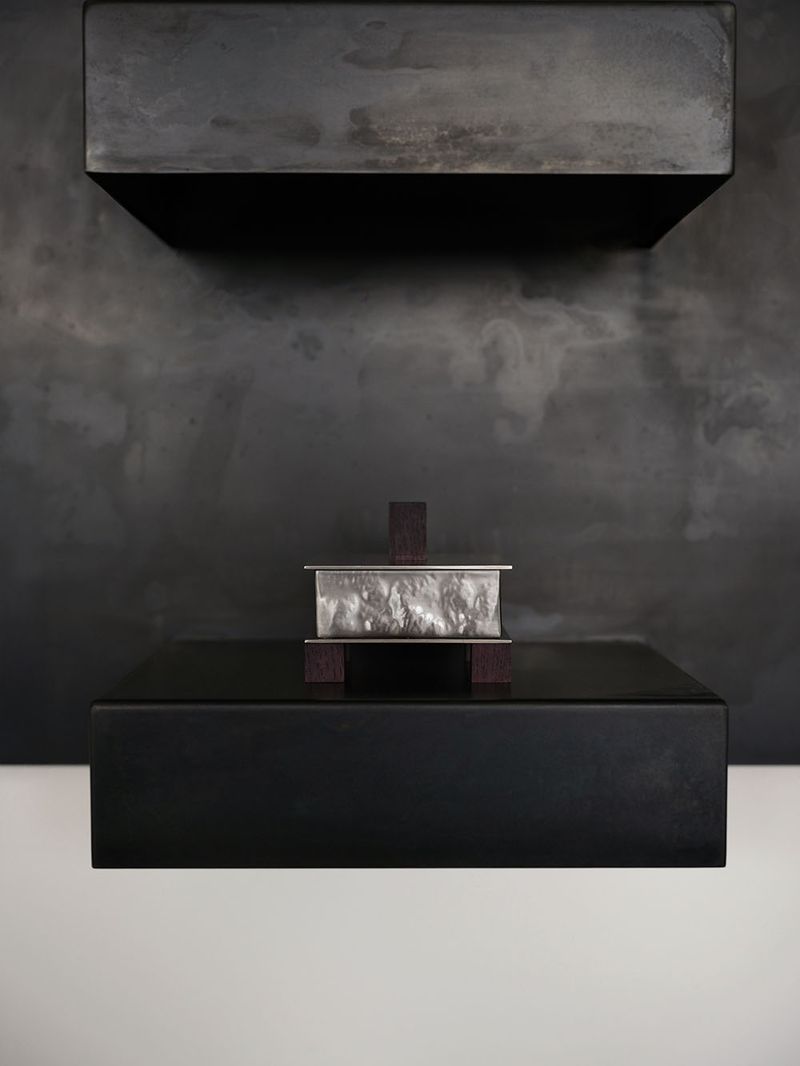
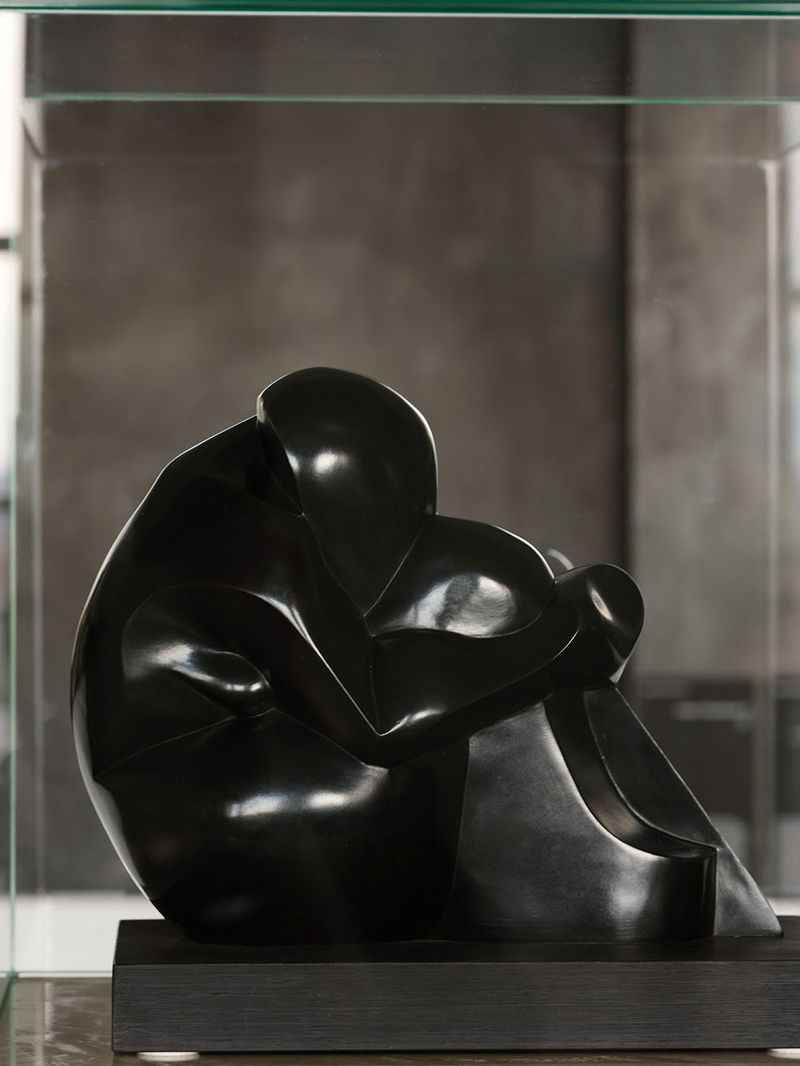
The Warsaw presentation has also been expanded to include works of art that were not shown in Milan, including pieces by Maria Jarema, Erna Rosenstein and Jerzy Nowosielski, bringing further important voices of twentieth-century Polish art into the show. The villa’s historic neo-Baroque architecture will become part of the display itself, set against the language of modernism. The exhibition was designed by Zofia Wyganowska and her studio. A distinctive green installation inspired by the mesh used to cover buildings during renovation will not only veil the historic architecture, but also point towards the building’s future – its planned renovation and transformation into a Museum of Design. The installation’s colour takes its cue from Katarzyna Hałas’s green glass and will also feature throughout the interiors.
The exhibition is curated by Federica Sala, an independent expert who works with leading international institutions and a member of the Visteria Foundation’s Programme Council, and Anna Maga, curator of the Gallery of Polish Design at the National Museum in Warsaw.
The exhibition’s title refers to a 1948 text by Irena Krzywicka. In it, the “struggle for beauty” meant more than a concern with aesthetics: it was a struggle for quality of life and an attempt to build a modern society through art, architecture and design. It therefore does not treat modernism as a self-contained style, but as a way of thinking about people, materials, technology and the future.
At Gawroński Villa, different facets of this phenomenon come together: from the pre-war avant-garde and functionalism, through post-war experiments with materials and industrial production, to contemporary reinterpretations of the modernist legacy. The designers and artists represented include Jan Kurzątkowski, Bohdan Lachert, Teresa Kruszewska, Maria Chomentowska, Julia Keilowa, Roman Modzelewski, Władysław Wincze, Zbigniew Horbowy, Wojciech Zamecznik, Aleksander Kuczma, Katarzyna Kobro, Władysław Strzemiński and Edward Krasiński, alongside figures from the contemporary design and art scenes.
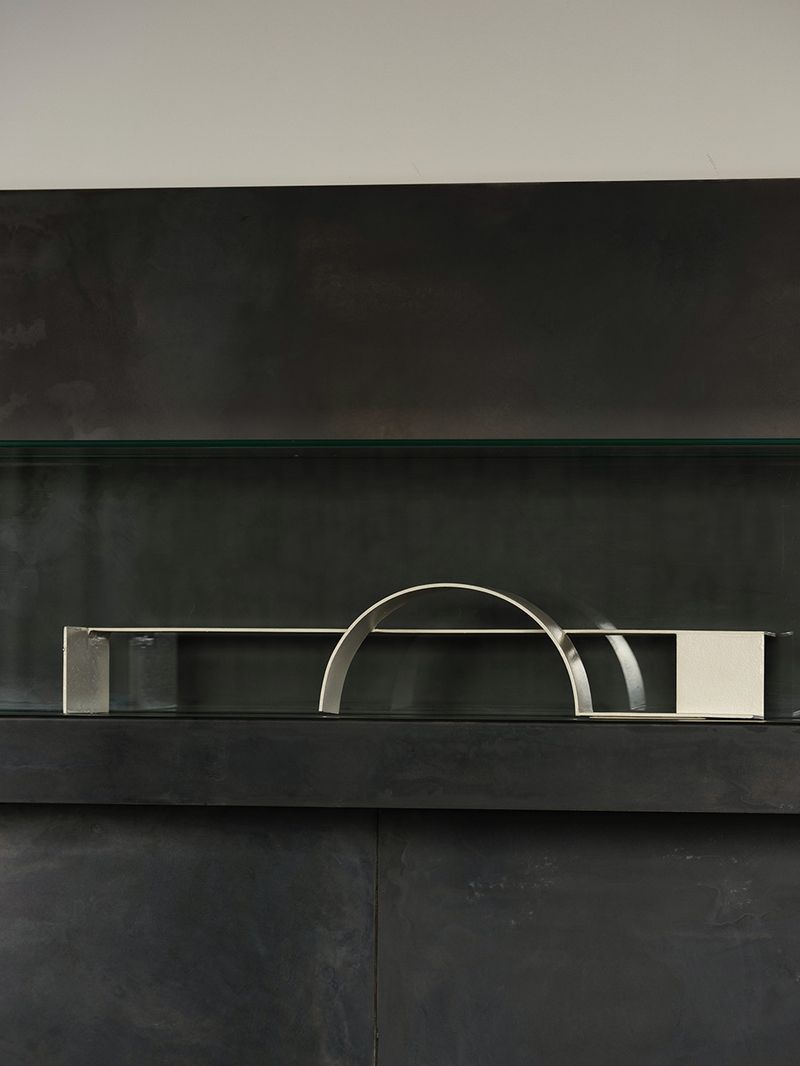
One of the exhibition’s key pairings brings together Bohdan Lachert’s functionalist deckchair and Aleksander Kuczma’s postmodern chair. Together, they show that Polish modernism had no single language: it could be austere and functional, but also experimental, ornamental, colourful or sculptural. The presence of works by Kobro, Strzemiński and Krasiński further expands the story beyond design, highlighting the close connections between art, architecture and design. One of Katarzyna Kobro’s sculptures will symbolically mark the entrance to the exhibition.
The Warsaw edition also asks what modernity means today. Modernism emerged in an age of faith in industry and mass production; today, we must contend with their excesses. Against this backdrop, questions of sustainability, responsible use of materials, quality and genuine human needs come to the fore once again. Polish Modernism. A Struggle for Beauty therefore seeks not so much to answer the question of what modernism was, but to explore what we can learn from it.
The exhibition will be accompanied by a programme of events, including curator-led tours, meetings with artists and experts, and talks on Polish modernism, the history of design and its contemporary challenges. Gawroński Villa will also host a pop-up by Zofia Chylak and a bookshop by the National Institute of Architecture and Urban Planning, with a selection focused on architecture, design and the history of Polish modernism.
Polish Modernism. A Struggle for Beauty will be on view at Gawroński Villa in Warsaw from 2 September to 11 October 2026, Wednesday to Sunday, 12 noon–7pm. Admission is free; registration is required.
Institutional partners:
The National Museum in Warsaw
The Adam Mickiewicz Institute
The Institute of Industrial Design
Central Museum of Textiles in Łódź
Polish Modern Art Foundation
DESA Unicum
Main partners:
Omnires
Audi Polska
gallery
other events

The Matter of Earth. A New Generation of Polish Collectible Design
Paris 10 September - 4 October 2026
Craft Days
Warsaw 20.05 –24.05.2026
Polish Modernism. A struggle for beauty
Milan 20.04 – 26.04.2026
Warszawa – São Paulo – Warszawa
Warsaw 06.09 - 19.10 2025
Romantic Brutalism. A Journey into Polish Craft and Design.
Warsaw 26.04 - 14.05 2025